By North Coast Tours Editorial
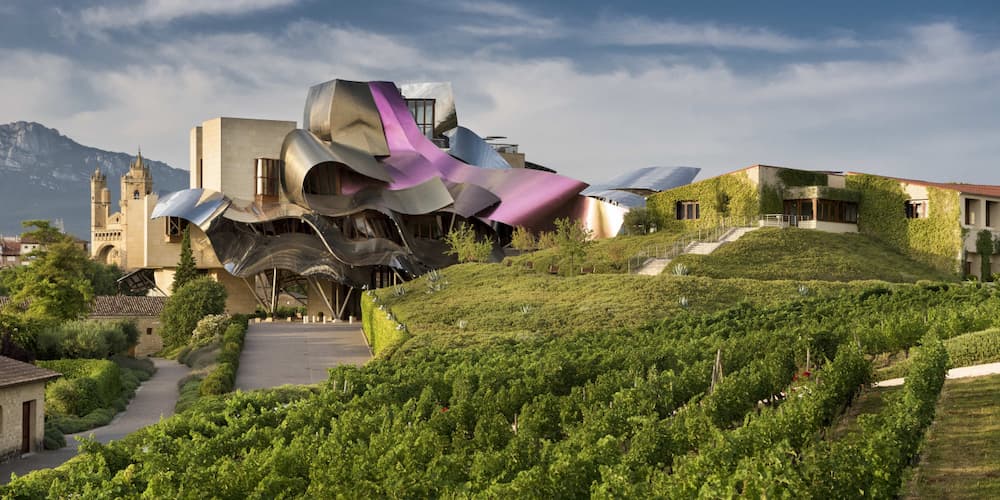
In the heart of the Rioja Alavesa, where the medieval stone of Elciego meets the rolling green of the Ebro valley, a silhouette of pink, gold, and silver titanium rises like a sudden cresting wave. This is the “City of Wine,” the headquarters of Herederos del Marqués de Riscal. While the architecture of Frank Gehry may be what draws the eye today, it is merely the latest chapter in a story that began nearly 170 years ago. Marqués de Riscal is not just a winery; it is the pioneer of modern Rioja, a relentless seeker of international prestige, and, as of recently, officially recognized as the “Best Vineyard in the World.”
The 19th Century: A Revolution in a Bottle
The history of Marqués de Riscal is the history of the modernization of Spanish wine. In 1858, Camilo Hurtado de Amézaga, the 6th Marquess of Riscal, was living in Bordeaux when he was commissioned by the local Alava government to hire a French expert to teach local growers the “Bordeaux method.” Camilo went further, sending French vine cuttings—Tempranillo was already local, but he introduced Cabernet Sauvignon, Merlot, and Malbec—back to his estate in Elciego.
Under the guidance of Jean Pineau, a master from Château Lanessan, the winery produced its first bottled vintage in 1862. Success was instantaneous. By 1895, Marqués de Riscal became the first non-French winery to receive the “Diploma of Honor” at the Bordeaux International Exhibition. To this day, the wine bottles carry a replica of this diploma on their labels, and the original diploma is a prized relic in the winery’s archives. It was during this golden era that the winery introduced the famous golden wire mesh (the malla) to its bottles, a security measure to prevent counterfeiters from refilling the prestigious bottles with inferior wine—a practice that soon became a hallmark of quality for all of Rioja.

The Gehry Transformation: Architecture as Art
For over a century, the winery operated out of its historic “1860” and “1883” cellars. However, as the 21st century approached, the board envisioned a project that would bridge the gap between their 19th-century roots and a futuristic vision. They approached the legendary Canadian-American architect Frank Gehry, fresh from the success of the Guggenheim Museum in Bilbao.
Initially, Gehry was hesitant to take on a project in such a rural, quiet corner of Spain. Tradition has it that the winery owners invited him to the estate and opened a bottle of wine from his birth year, 1929, from the “Cathedral”—their private collection of every vintage since 1862. Touched by the gesture and the wine’s incredible longevity, Gehry accepted. The resulting Hotel Marqués de Riscal, inaugurated in 2006, is a masterpiece of deconstructivist architecture. The pink ribbons represent the wine, the gold represents the mesh of the bottle, and the silver represents the foil capsule. Built by the same engineering teams that realized the Guggenheim, the hotel is a “modern château” that houses 61 luxury rooms and a Michelin-starred restaurant. It serves as the crown jewel of the estate, turning a traditional vineyard into a global luxury destination.
The Land and the Vines: Production and Location
The excellence of the wine starts in the ground. The estate manages approximately 1,500 hectares of vineyards, with 500 hectares owned directly and another 1,000 controlled through long-term partnerships with local growers in Elciego, Leza, Laguardia, and Villabuena. The soil here is primarily calcareous clay, which provides the perfect drainage and mineral stress to produce grapes with high acidity and aging potential.
Tempranillo is the undisputed king of the estate, making up the vast majority of the red plantings. However, Riscal is unique in Rioja for its historic “special permit” to use Cabernet Sauvignon, a legacy of the 6th Marquess’s original French imports. These old-vine Cabernet grapes are essential to the winery’s top-tier blends. In the white wine region of Rueda, where Riscal was a founding force in the 1970s, they focus heavily on Verdejo and Sauvignon Blanc, producing over 7 million bottles annually across all their labels.

A Portfolio of Excellence: The Wines Explained
The winemaking philosophy at Riscal is one of balance—maintaining the classic “Rioja” elegance while embracing modern concentration. The Reserva is the flagship, a classic blend of Tempranillo and Graciano aged for two years in American oak. It is the benchmark for the region. The Gran Reserva takes this a step further, using only grapes from vines over 80 years old, resulting in a wine of immense depth and longevity. For special celebrations, the Gran Reserva 150 Aniversario is produced only in exceptional vintages, serving as a powerful, structured tribute to the winery’s long history, offering notes of roasted coffee and black fruit that can age for decades.
The “XR” series has recently become a favorite for those seeking a more modern, fruit-forward profile. The XR Red (Reserva) and the vibrant XR Rosé are named after the “XR” (Extra Reserva) markings that cellar masters used to chalk onto barrels of exceptional quality during the 19th century. At the top of the pyramid sit the “Signature” wines. Barón de Chirel, launched in 1986, was the first “Alta Expresión” wine in Rioja, breaking the traditional mold to focus on the best fruit from the best plots. Finca Torrea offers a more “Avant-Garde” style—shorter aging and more fruit intensity. Finally, the Frank Gehry Selection is an ultra-limited wine made from the most exclusive selections of the estate’s oldest vines, designed to be as bold and complex as the building that bears its name.
Beyond the reds, the winery’s Verdejo from Rueda has become the standard-bearer for Spanish white wines—fresh, aromatic, and crisp. They also produce a refreshing Rosado (rosé) and several organic labels, reflecting a modern commitment to sustainability. To truly appreciate this range, you must experience it at the source. Book your private, luxury Marqués de Riscal experience with North Coast Tours to see the City of Wine in person and taste these legendary vintages where they were born.

The Best Vineyard in the World
Recognition of this commitment reached its peak recently. After being ranked in the top ten for several consecutive years, Marqués de Riscal was named the World’s Best Vineyard in 2024. This award does not just look at the wine in the glass, but the “universe of experiences” offered to the visitor. Judges were captivated by the seamless integration of the historic 1860 cellars with the Gehry hotel, the quality of the Michelin-starred gastronomy by chef Francis Paniego, and the Caudalie Vinothérapie Spa.
The winery’s history of awards is unrivaled. From the 1895 Diploma of Honor to being named one of the “World’s Most Admired Wine Brands” by Drinks International, Riscal has consistently proven that it can adapt to the times without losing its soul. It remains the gold standard of Spanish viticulture.

The Experience: 5-Star Tours and Beyond
For those visiting the estate, the tours are widely regarded as the gold standard in global wine tourism. Unlike larger, more commercial operations, a tour at Marqués de Riscal feels like a chronological journey through the evolution of Spain itself. Visitors walk through the original 19th-century cellars, where thousands of ancient bottles rest in the shadows of “The Cathedral,” before emerging into the light of the modern production facility with its state-of-the-art sorting tables and French oak vats.
To truly appreciate the bridge between 1858 and the modern day, one must experience the atmosphere in person. Book your private, luxury Marqués de Riscal experience with North Coast Tours to see the City of Wine in person, where our expert guides ensure you bypass the crowds and receive the VIP treatment this historic estate demands. The quality of the tasting sessions ensures that whether you are a novice or a seasoned sommelier, you leave with a profound understanding of why this estate changed the world of wine forever. For Anton and the team at North Coast Tours, this remains the “must-see” destination—a place where history, art, and the perfect grape converge.